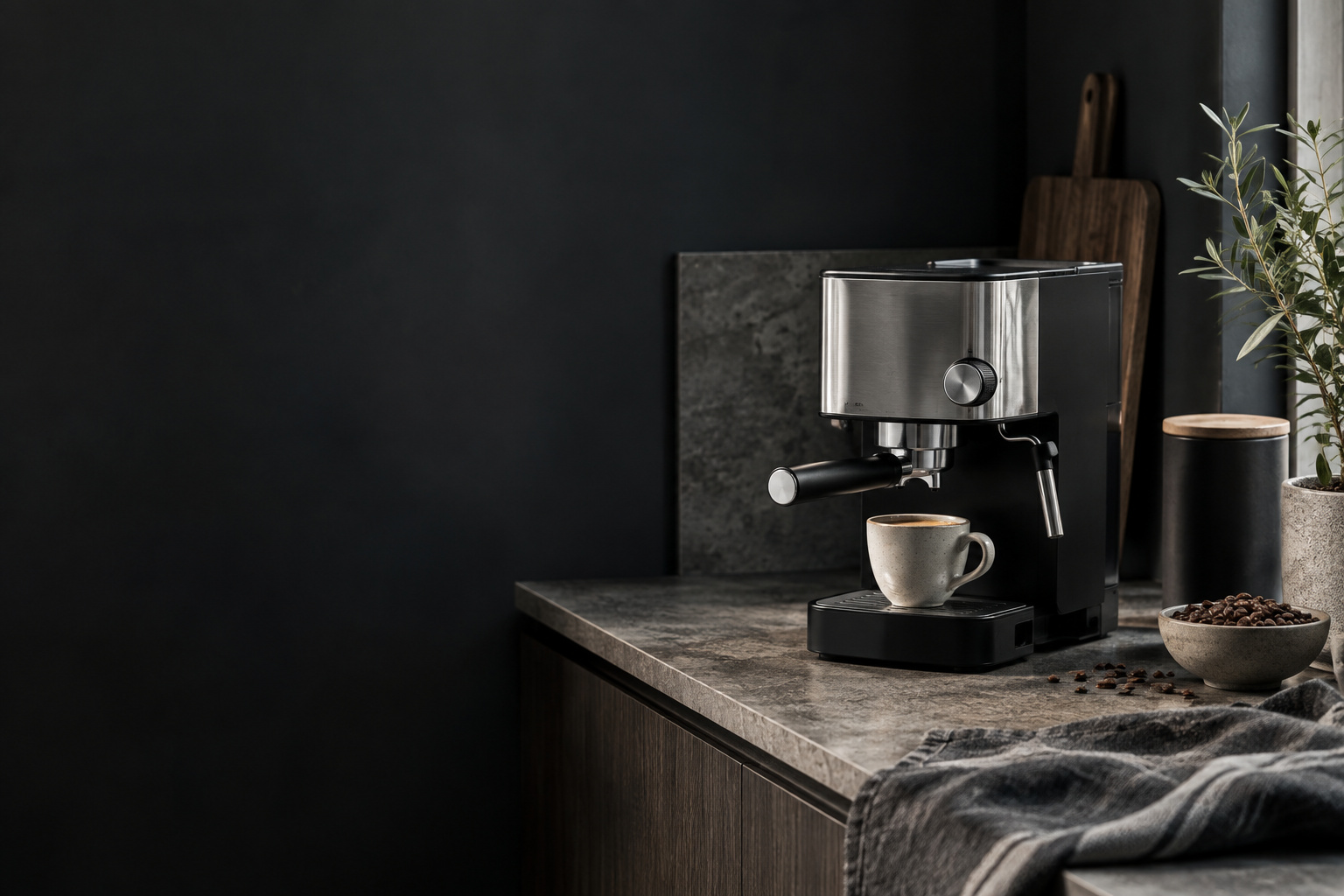
Choose a compact espresso machine around the work you want to do every morning. A narrow body can still need room for a grinder, a moving steam wand and a removable tank. This guide turns a tempting product listing into a practical buying checklist, without pretending that a photograph proves performance.
Describe your normal morning
Write down the drink you actually make most often, who makes it and where it is consumed. One black espresso before work creates a different shopping brief from several milk drinks for a household. Include the person least interested in learning the machine. A setup that only one enthusiast can operate may be a poor shared appliance even when its feature list looks impressive.
Next decide which steps you want to control: grinding, measuring, preparing the basket and steaming milk. Treat these as preferences, not a hierarchy of coffee seriousness. If you want fewer manual decisions, read our ground coffee versus capsule workflow guide before narrowing the machine list. Do not buy a manual routine on the assumption that you will enjoy it later. Describe a realistic weekday rather than an occasional relaxed weekend, then use that description to reject features you will rarely use.

Measure the working space, not just the body
Make a paper outline of the available counter area. Add the space needed to insert the portafilter, put down a pitcher and reach the water tank. Open the cabinet door above that outline. Imagine removing the drip tray without tilting a cup into the kitchen. Those actions reveal obstacles that a single width measurement misses.
Look up dimensions for the exact regional model in manufacturer documentation.
- If a dimension or required clearance is absent, ask the manufacturer instead of estimating from a lifestyle photo.
- Reserve a preparation surface alongside the machine rather than balancing tools on its top.
- Our small-space station planning guide provides a useful dry-run sequence.
- The relevant safety baseline is also model specific: the Bambino instruction book, for example, requires a stable, dry, level placement away from the counter edge.
- This is an example to check against your own manual, not a clearance specification for every machine.
Read the included equipment as a system
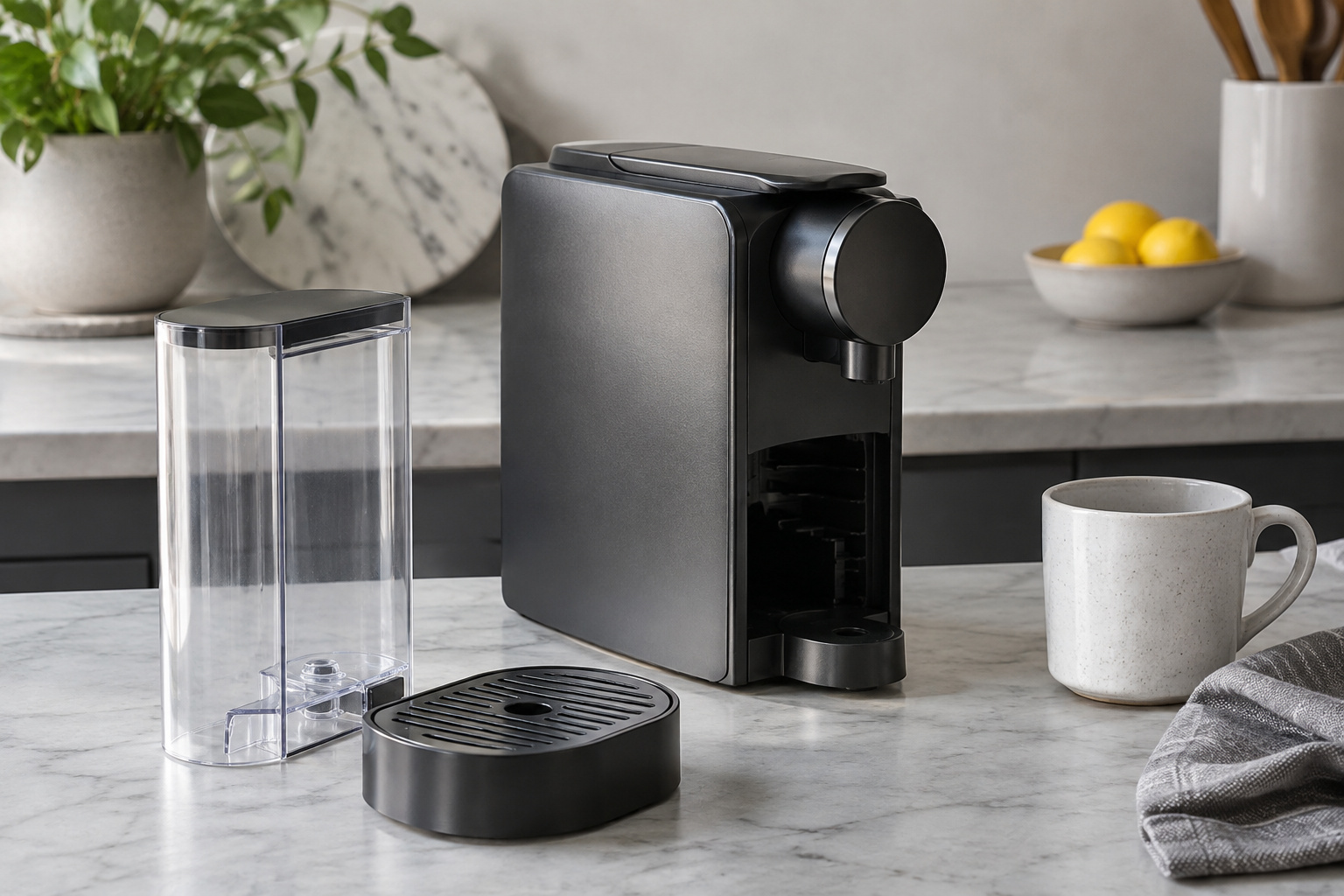
A listing can show a grinder, pitcher and several accessories while selling only the machine. Separate the product title, package contents and lifestyle images. Record exactly which basket types, portafilter, tamper and cleaning tools are included. Leave an item marked unknown when the evidence is unclear. A bundle is useful only if its components support your intended routine and fit the exact model.
Plan the grinder alongside the machine if you want to prepare fresh ground coffee. An existing grinder should be assessed on documented espresso suitability and adjustment workflow, not simply on whether its dial has a fine end. Our grinder selection guide explains the questions to ask. Avoid spending the whole budget on the machine and treating the rest of the setup as an afterthought. Conversely, do not buy a drawer of accessories before you understand the supplied equipment. A basic, compatible setup is easier to evaluate than several unfamiliar upgrades introduced together.
Investigate milk and maintenance before checkout
For milk drinks, look for instructions that show what the user must do, how the wand moves and what happens after steaming. A word such as automatic needs a concrete explanation: which steps are automated, and which cleaning steps remain yours? Watch the exact model demonstration if available. A demonstration can clarify controls, but it is not our independent measurement of steam speed or milk quality.
Open the maintenance chapter before buying. Identify where approved cleaning products go, which parts come off and where used water is collected. The manufacturer support hub is a starting point for the Bambino's own documentation and tutorials. For another machine, find its equivalent. Consider whether you can store supplies and perform the routine in your kitchen. A machine that is easy to buy but awkward to service may be the wrong compact choice. Ask about replacement parts through the manufacturer rather than assuming availability from a generic accessory listing.
Build a shortlist you can defend
Use three columns: requirement, evidence and unresolved question. Requirements might include a reachable tank, a preferred milk workflow or compatibility with a grinder you own. Evidence should be a manual page, an exact package list or a manufacturer answer. An unresolved question is a reason to investigate, not a number to fill with a guess.
The product cards in this guide are category-based starting points. Their ratings reflect documented listing data only, because we have not measured extraction quality, noise, reliability or service life. Compare the current exact listings, verify what is supplied and check the return terms at the purchase channel. Do not interpret catalog order as a quality ranking. Your final choice should satisfy the requirements you wrote before shopping. If two models both pass, prefer the workflow you can explain clearly and maintain consistently rather than an unexplained specification that sounds more impressive.
| Section | Key point |
|---|---|
| Describe your normal morning | Include the person least interested in learning the machine. |
| Measure the working space, not just the body | Open the cabinet door above that outline. |
| Read the included equipment as a system | Separate the product title, package contents and lifestyle images. |
| Investigate milk and maintenance before checkout | Open the maintenance chapter before buying. |
| Build a shortlist you can defend | Use three columns: requirement, evidence and unresolved question. |