Dialing in means learning how your coffee, grinder and basket behave together. A useful session changes one thing at a time and records what happened. It does not require a universal recipe or a numerical quality score. Start with the exact equipment instructions, then use observation to choose your next adjustment.
Establish a repeatable starting point
Identify the basket you are using and find its intended operating guidance. Use the manufacturer's recipe or your coffee supplier's suggested starting point only when it suits that basket and machine. A number from a different setup is not permission to overfill yours. Our basket compatibility guide helps distinguish a fit question from a brewing adjustment.
Prepare a simple note with coffee identity, basket, grinder position, amount of dry coffee, beverage amount and your impression of the drink. Record quantities when you actually measure them; do not reconstruct missing numbers afterward. Also note a meaningful change such as a new bag or a different basket. You are building a comparison with your previous attempt, not collecting impressive-looking data. Set the machine up as its manual directs, and avoid beginning an experiment while a maintenance warning or an unresolved operating problem is present.
Choose one question for the next shot
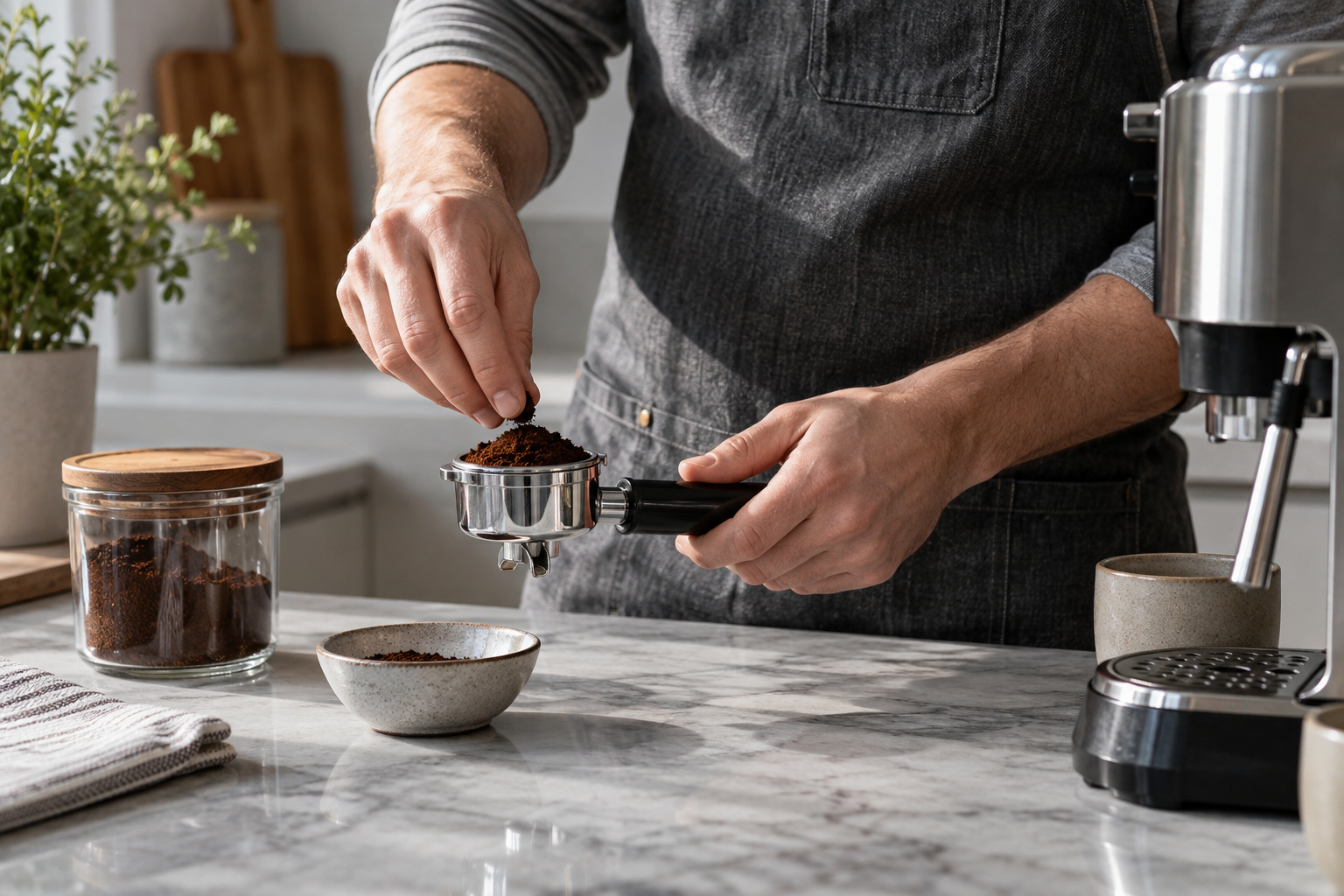
A productive question is narrow: what happens if I make one small grind adjustment while keeping my other preparation choices steady? An unhelpful question is whether an entirely different coffee, dose, basket and output tastes better than yesterday. Too many changes make the result hard to explain, even when the drink improves.
Baratza's dialing-in guide recommends maintaining the dose while making small grind changes, testing again and recording the changes. We use that as a method for comparison, not as a guarantee that its example recipe suits every machine. Follow your grinder's instructions for when and how to move the adjustment. Do not assume every mechanism should be turned in the same operating state. If your grinder does not provide the adjustment control you need, review our grinder buying questions before compensating with a growing collection of accessories.
Observe the drink without turning clues into diagnoses
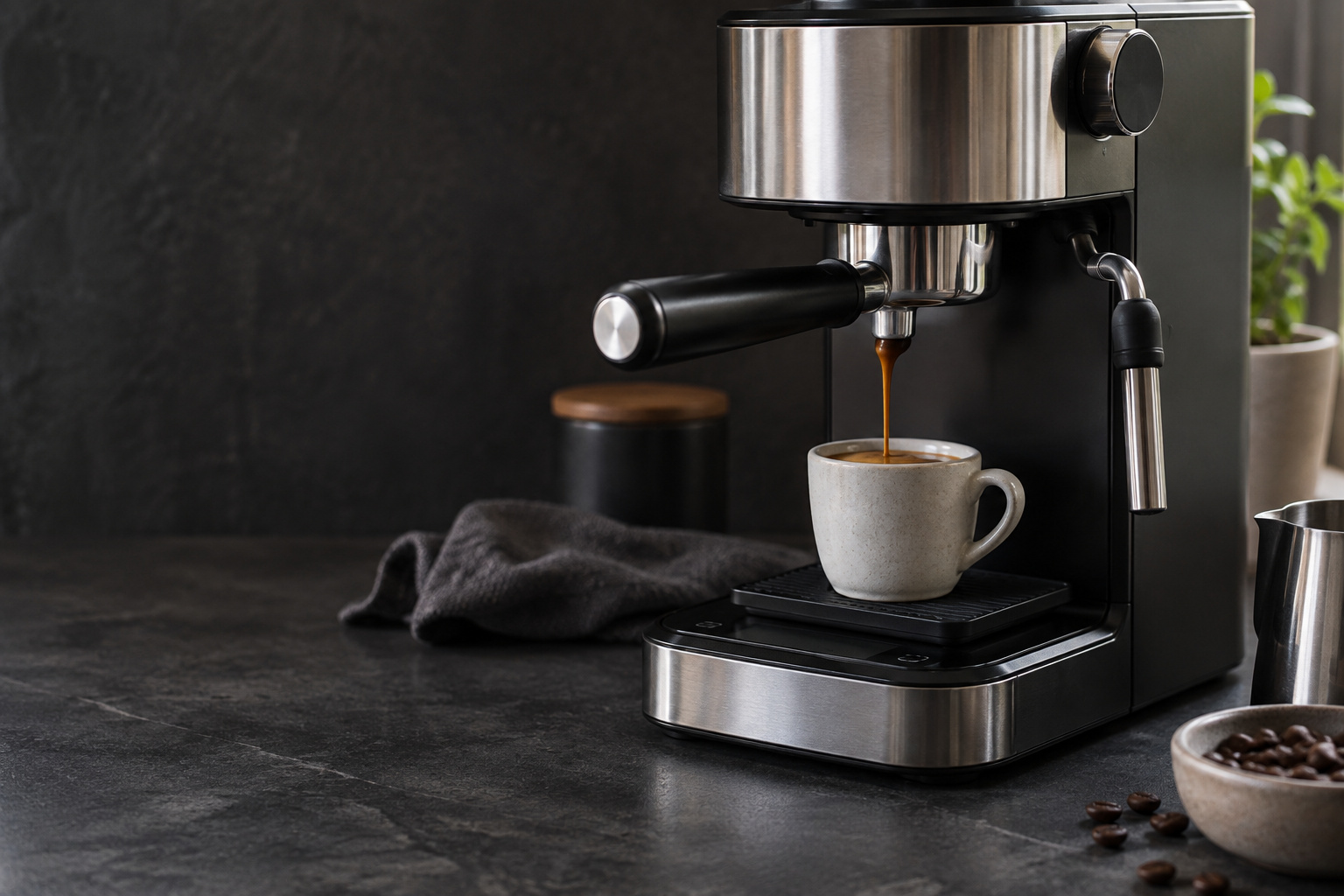
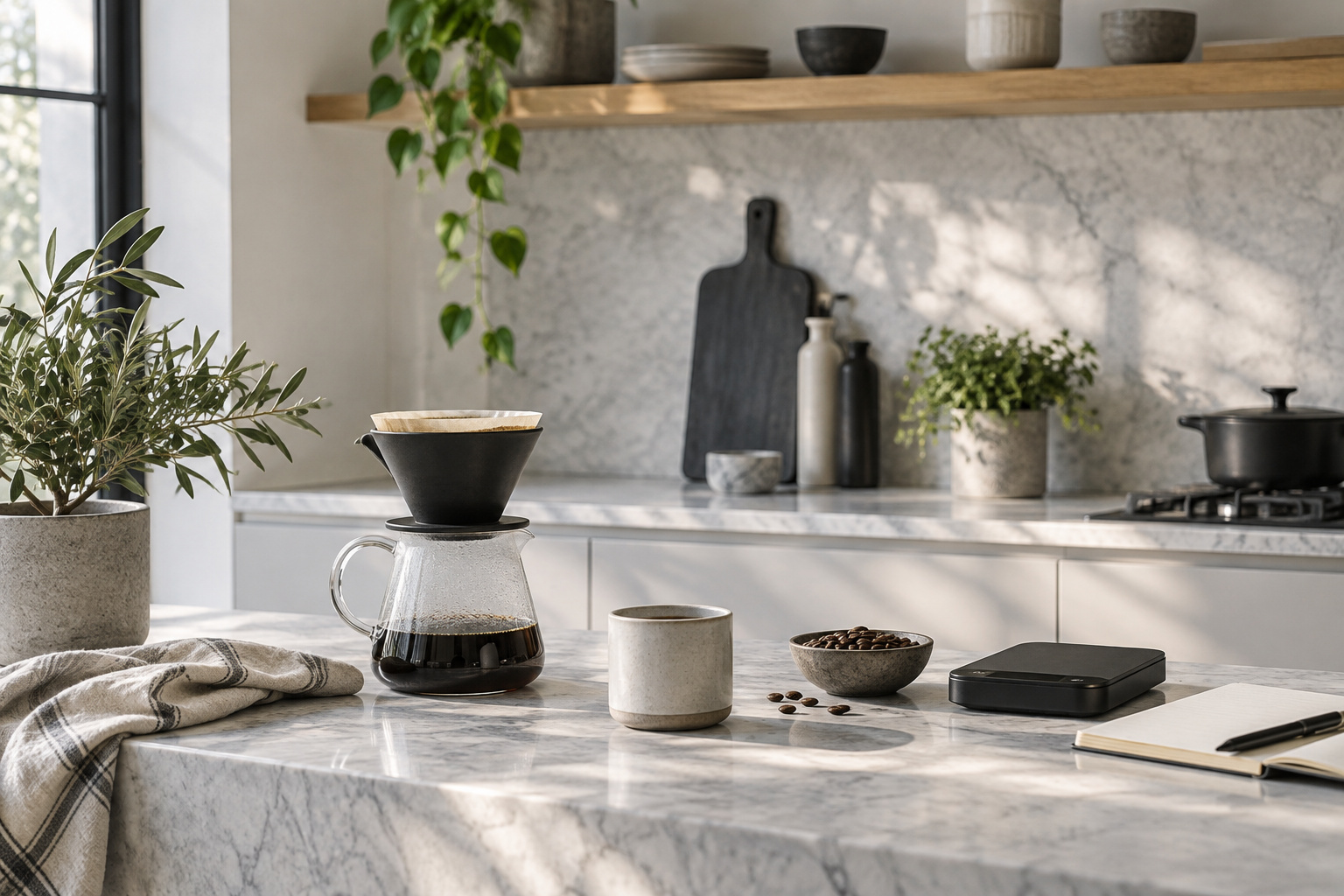
Describe what you can actually see and taste. Did liquid appear promptly or only after an unusual delay? Was the flow even enough to observe, or was the cup placement obscuring it? Did you prefer the drink to the previous one once it was comfortable to taste? Keep observations separate from explanations. A slow-looking pour does not, by itself, prove a machine fault or a particular extraction percentage.
Use taste words that help you choose the next step, even if they are ordinary descriptions such as harsh, thin or pleasant with milk. You do not need to borrow a professional tasting vocabulary. Compare drinks prepared in a similar way rather than judging one hot shot against another that has cooled substantially. Stop if the machine behaves abnormally and follow its troubleshooting guidance. Never remove a portafilter during brewing to inspect the puck. A coffee experiment is not a reason to bypass normal operating precautions.
Make the notebook useful rather than exhaustive
Keep each entry short enough that you will write it again tomorrow. For example, record the setting you used, the change you made and whether you would repeat it. Do not write a conclusion about a grinder's overall quality from a single morning. Likewise, a recipe that suits one coffee is a useful personal reference, not a specification to publish for every bean.
When two attempts disagree unexpectedly, return to the inputs before buying anything. Check whether the coffee, basket, measuring process or preparation changed. If an operating symptom repeats, use our troubleshooting checklist to separate an observable problem from a guess about its cause. Keep the last acceptable routine available so you can return to it. This prevents every new suggestion from erasing the only useful baseline you have. A photograph of your notes can be convenient, but avoid photographing a hot working machine while distracted from its operation.
Know when the session has done enough
Set a practical stopping condition before you begin: a drink you enjoy, a clearer understanding of one adjustment, or a question that needs manufacturer support. Continuing through many unrelated changes can turn a small problem into confusion. If the coffee is enjoyable in the drink you normally make, you do not need to chase somebody else's appearance or timing target.
Accessories shown with this guide are category-based options for preparation and observation.
- Verify dimensions, intended use and compatibility before buying; the cards are not a required shopping list.
- Product ratings reflect documented listing data because these pages contain no measured extraction or sensory ranking.
- Start with the tools that answer an actual question in your routine.
- Keep the successful process simple enough for your future self to repeat on a busy morning.
- Your notebook should explain the next useful action, not make coffee feel like an exam.
- If no adjustment produces normal operation, pause brewing and consult the machine or grinder support channel rather than opening the appliance or inventing a repair.
| Section | Key point |
|---|---|
| Establish a repeatable starting point | Identify the basket you are using and find its intended operating guidance. |
| Choose one question for the next shot | Follow your grinder's instructions for when and how to move the adjustment. |
| Observe the drink without turning clues into diagnoses | Keep observations separate from explanations. |
| Make the notebook useful rather than exhaustive | Check whether the coffee, basket, measuring process or preparation changed. |
| Know when the session has done enough | Continuing through many unrelated changes can turn a small problem into confusion. |