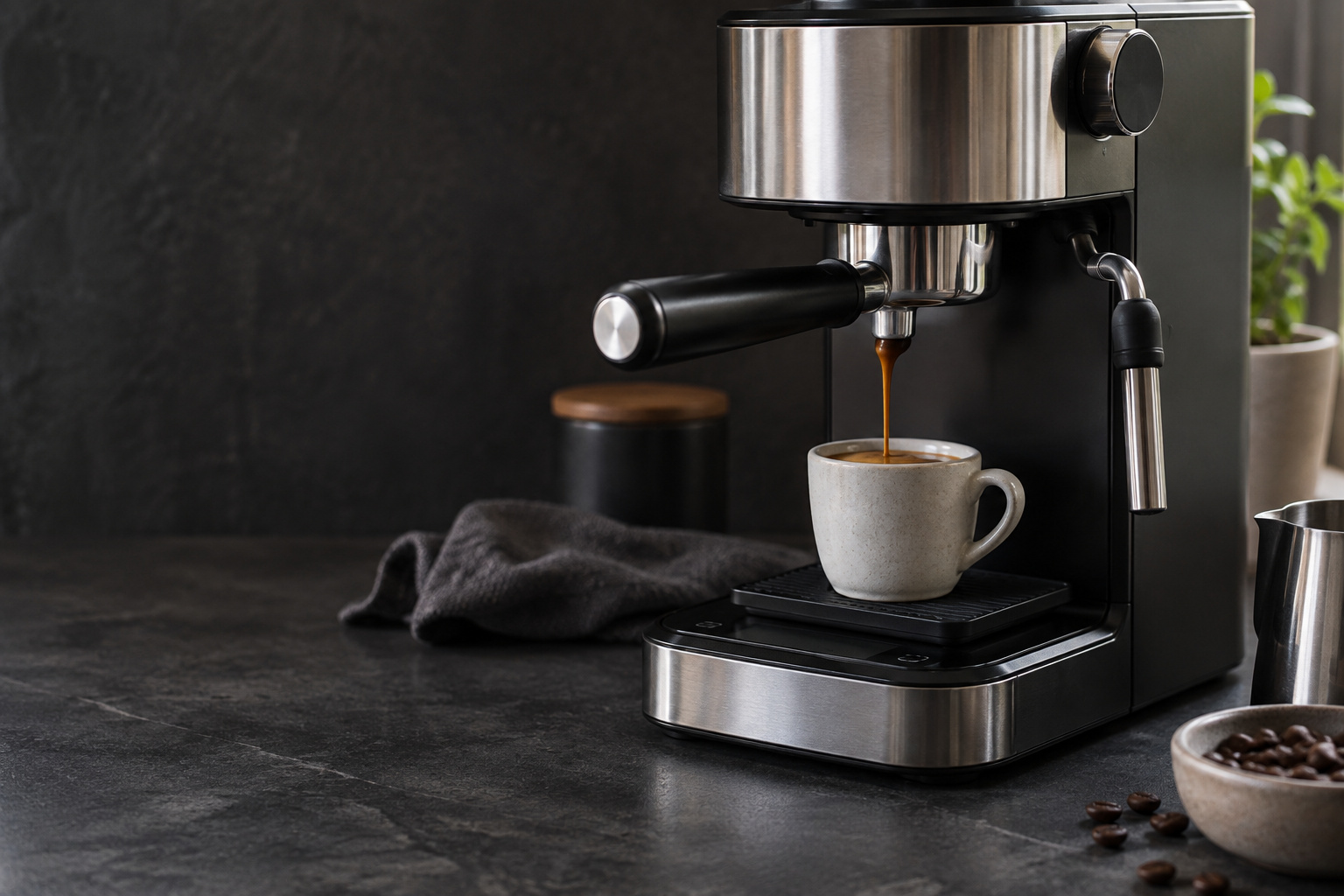
An espresso accessory fits a particular assembly, not merely a number in a product title. Before buying a basket, tamper or portafilter, identify the machine and the part it uses. This guide separates physical fit, brewing purpose and seller claims so an inexpensive accessory does not become an avoidable compatibility problem.
Identify the complete assembly
Record the full machine model and regional version from its identification information. Photograph the existing owner-removable portafilter and basket when they are cool and safe to handle. Keep any part number or marking visible. Identify which piece you want to replace and why: a damaged component, a missing supplied part or an intentional change to the brewing workflow.
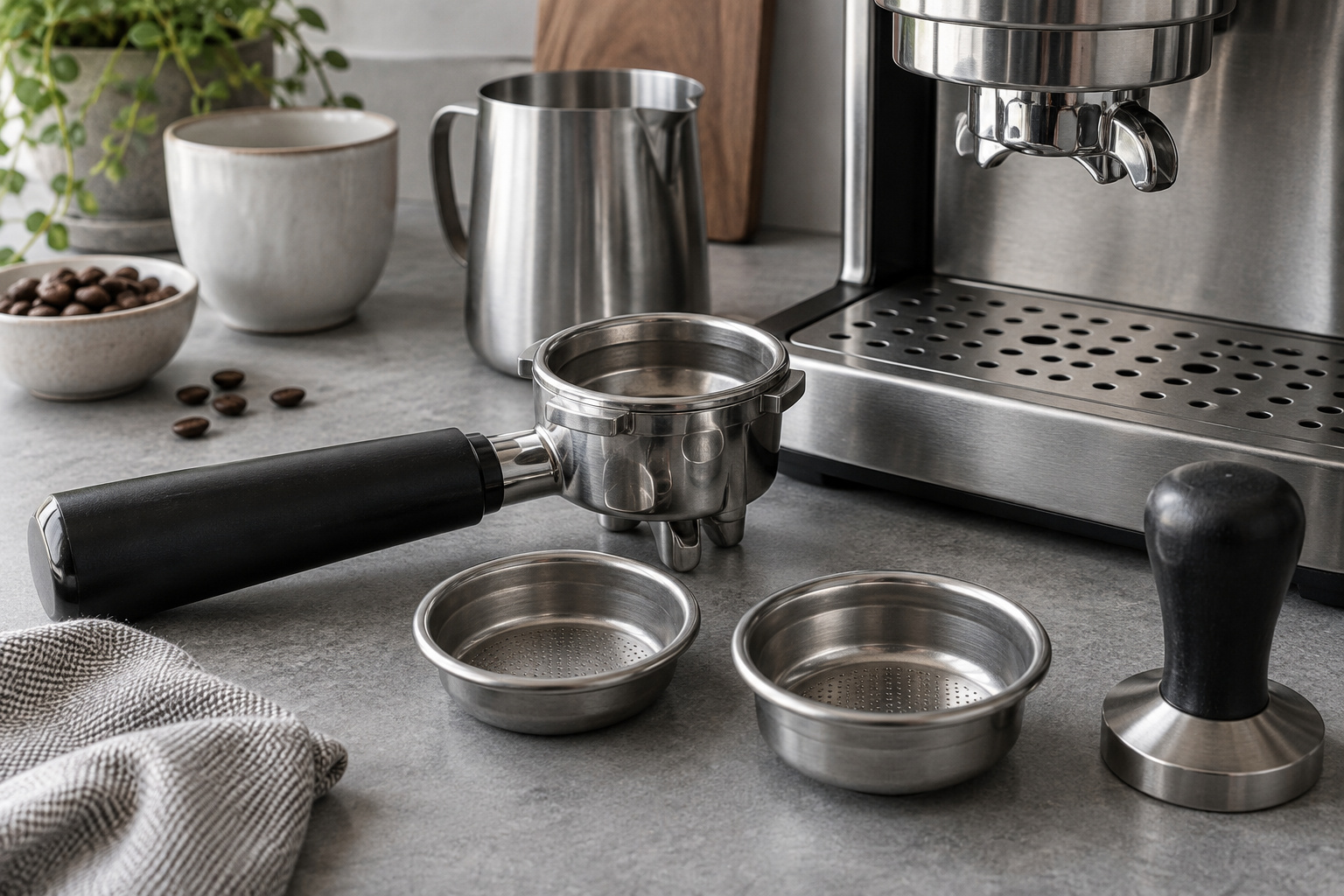
Do not describe everything as the filter. The basket holds the coffee, while the portafilter carries it and connects to the machine. The tamper is another separate fit question. A listing may use all three words in its title even though only one item is included. Write a plain sentence such as replacement basket for the supplied portafilter on this exact model. That sentence is more useful to a manufacturer or seller than a photograph alone, and it prevents you from buying a complete assembly when only a documented replacement part is needed.
Do not use nominal diameter as the entire fit test
A diameter in a listing is useful information, but it should not replace an explicit compatibility statement for the exact assembly. Ask about the locking arrangement, basket shape and depth, clearance within the portafilter and any relevant retention feature. You do not have to become a component designer; you do need a source that connects the replacement to your equipment.
If dimensions are supplied, confirm what was actually measured. A basket rim, a working interior and a tamper face are different things. Avoid comparing two unexplained numbers as if they describe the same surface. Never force a part into position to see whether it will work under pressure. Resolve uncertainty with the manufacturer or a qualified support channel before use. Check the seller's return conditions before ordering, but do not treat a return policy as proof that an unverified part is safe to try in operation.
Understand what the basket is intended to do
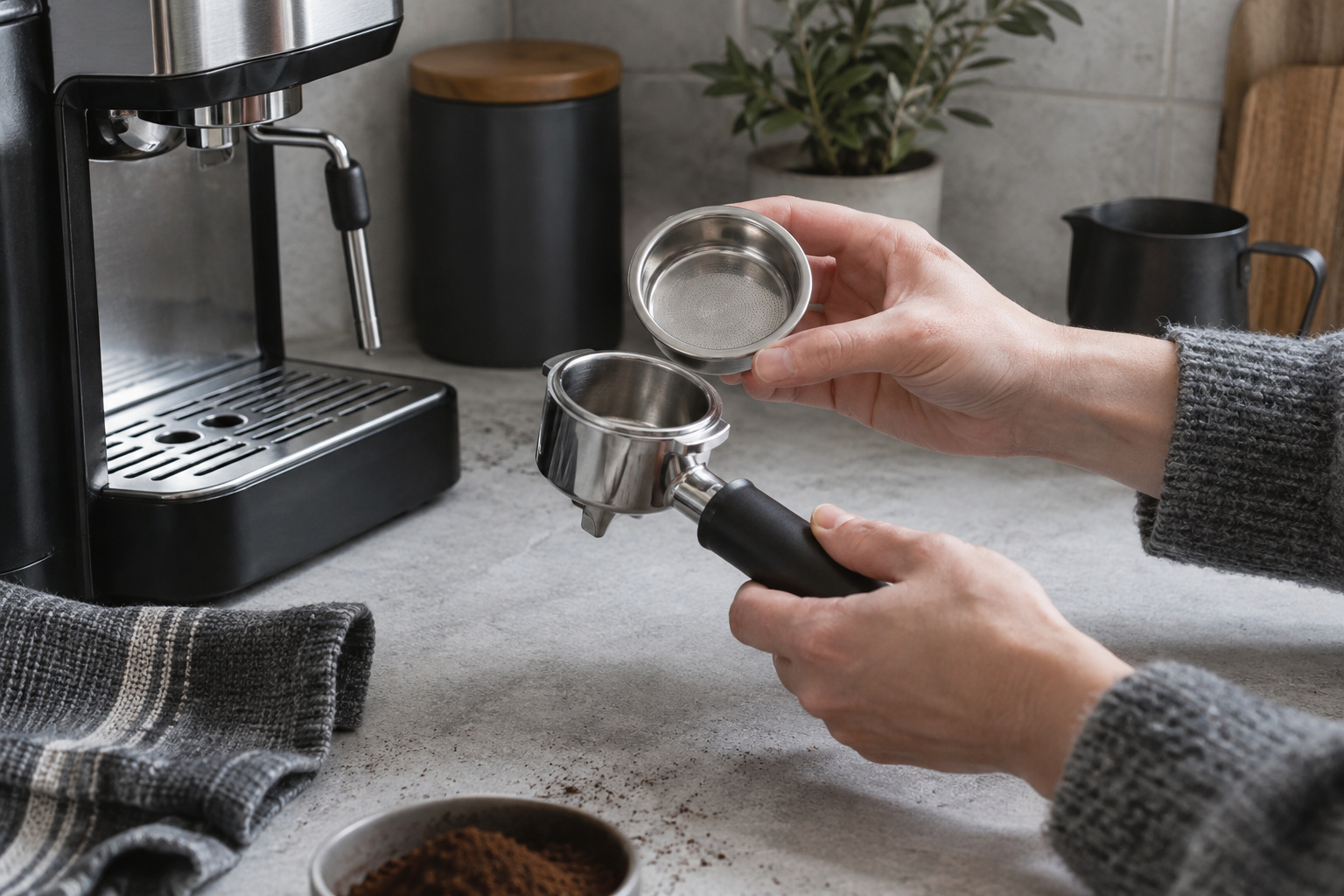
Read the instructions for the basket type already supplied. The Bambino manual, for example, distinguishes its single-wall baskets for freshly ground beans from its dual-wall baskets for pre-ground coffee. That is model-specific guidance, not a reason to assume every basket described as pressurized or unpressurized has the same requirements.
An accessory can change the routine you need to learn. Before replacing a basket, consider whether your grinder and preparation process match its intended use. Our grinder selection guide helps you ask that question without relying on marketing language. If your current coffee is inconsistent, try the controlled dialing-in approach before changing hardware. A new component introduces another variable and may make an existing problem harder to understand. Buy it because its documented purpose matches a deliberate goal, not because a generic upgrade label promises better espresso.
Check cleaning and handling as part of compatibility
Find out how the replacement part is supposed to be cleaned and which materials or finishes its maker identifies. Do not assume an accessory inherits the dishwasher permission of a different part or a different machine. Keep its own instructions together with the machine manual. If the two sets of directions appear inconsistent, ask for clarification before using a chemical or cleaning cycle.
Our maintenance guide recommends naming each cleaning task and matching it to an approved process. The same discipline applies to new accessories. A portafilter with a different handle or finish may introduce a care question even when the seller states that its locking arrangement fits. Inspect a received item against the exact order and documented markings while it is unused. A mismatch between the delivered part and the listing is a purchasing issue to resolve, not an invitation to modify the component yourself.
Use the product cards as leads, not fit certification
The accessory selections below come from the current catalog category. They are not a cross-reference database and should not be read as a list of approved parts for every machine discussed on the site. Verify the exact listing, model match and included items at the purchase channel. Keep written compatibility evidence with the order so you can identify the part later if a question arises.
All item ratings reflect documented listing data.
- We have not pressure-tested replacements, measured their manufacturing tolerances or compared their extraction results.
- A useful final check is to explain the purchase in three statements: this is the component I need, this source identifies it for my equipment, and these are its operating and cleaning instructions.
- If any statement is unresolved, pause the purchase and ask.
- That may feel slower than ordering the most popular-looking accessory, but it is a clearer route to a setup that you can use, maintain and troubleshoot without relying on assumptions.
- Keep the original working parts labeled rather than losing the only known baseline during an upgrade.
| Section | Key point |
|---|---|
| Identify the complete assembly | Keep any part number or marking visible. |
| Do not use nominal diameter as the entire fit test | If dimensions are supplied, confirm what was actually measured. |
| Understand what the basket is intended to do | Read the instructions for the basket type already supplied. |
| Check cleaning and handling as part of compatibility | The same discipline applies to new accessories. |
| Use the product cards as leads, not fit certification | All item ratings reflect documented listing data. |