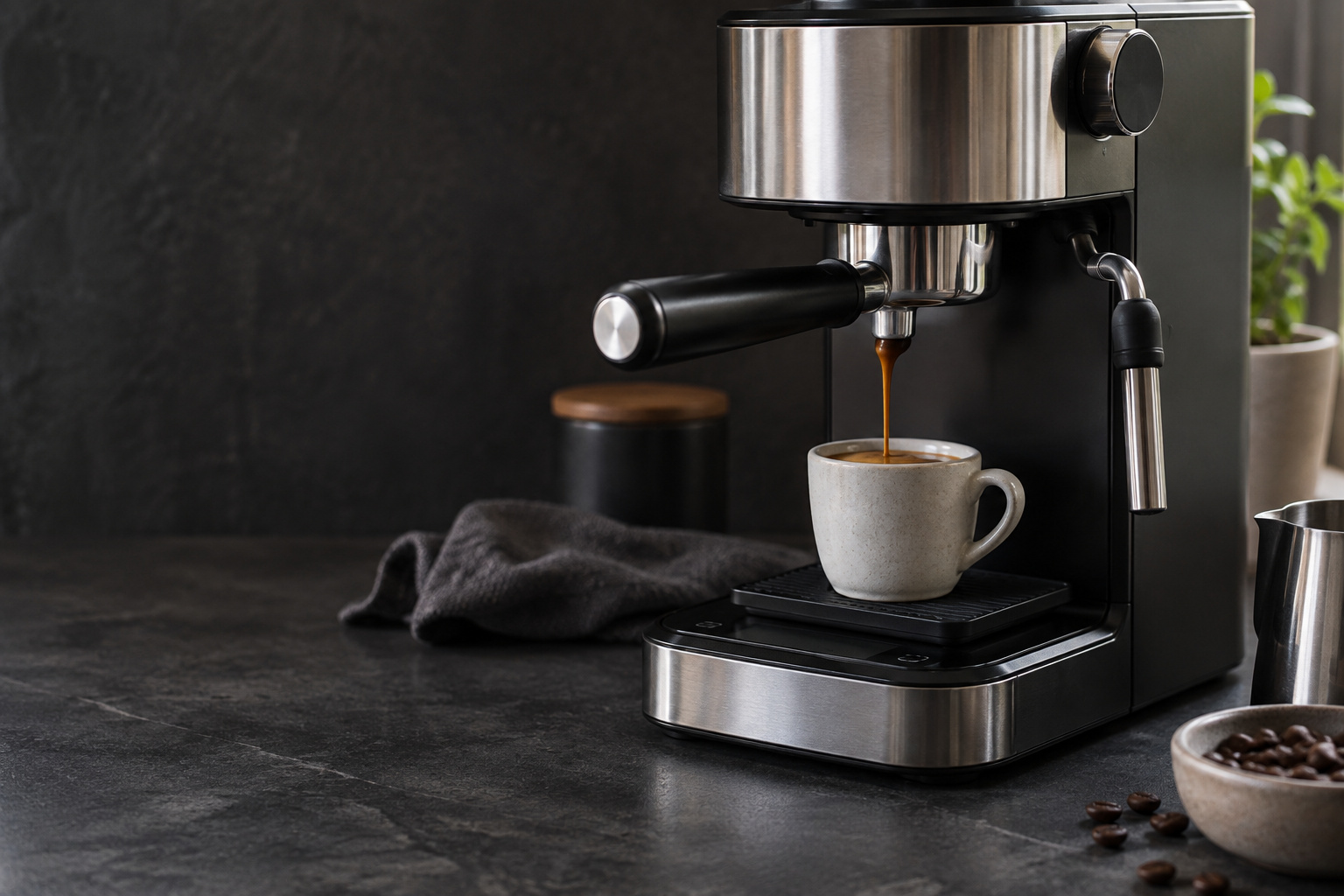
An espresso grinder belongs in the same buying decision as the machine. The useful question is whether you can make, repeat and maintain the adjustments your brewing routine needs. This guide focuses on adjustment, handling and documentation, without assigning taste scores to burr shapes or claiming unmeasured grind consistency.
Start with the basket and coffee you intend to use
Before comparing grinders, identify your machine and basket type. Read the instructions supplied with that exact combination. A grinder purchase should solve a specific problem, such as preparing fresh coffee for a basket whose workflow calls for it, rather than respond to a vague promise of professional results. If you cannot identify the basket, resolve that first with our basket and portafilter compatibility checklist.
List the coffee routines the grinder must serve. An espresso-only station has a different adjustment pattern from a household that alternates between espresso and another brewing method. Think about who changes the setting, how they record it and whether they will return it afterward. Include decaffeinated coffee or different beans if they are part of your normal use. These details do not determine a universal winning grinder; they tell you which controls and handling steps are worth inspecting closely.
Understand the adjustment system
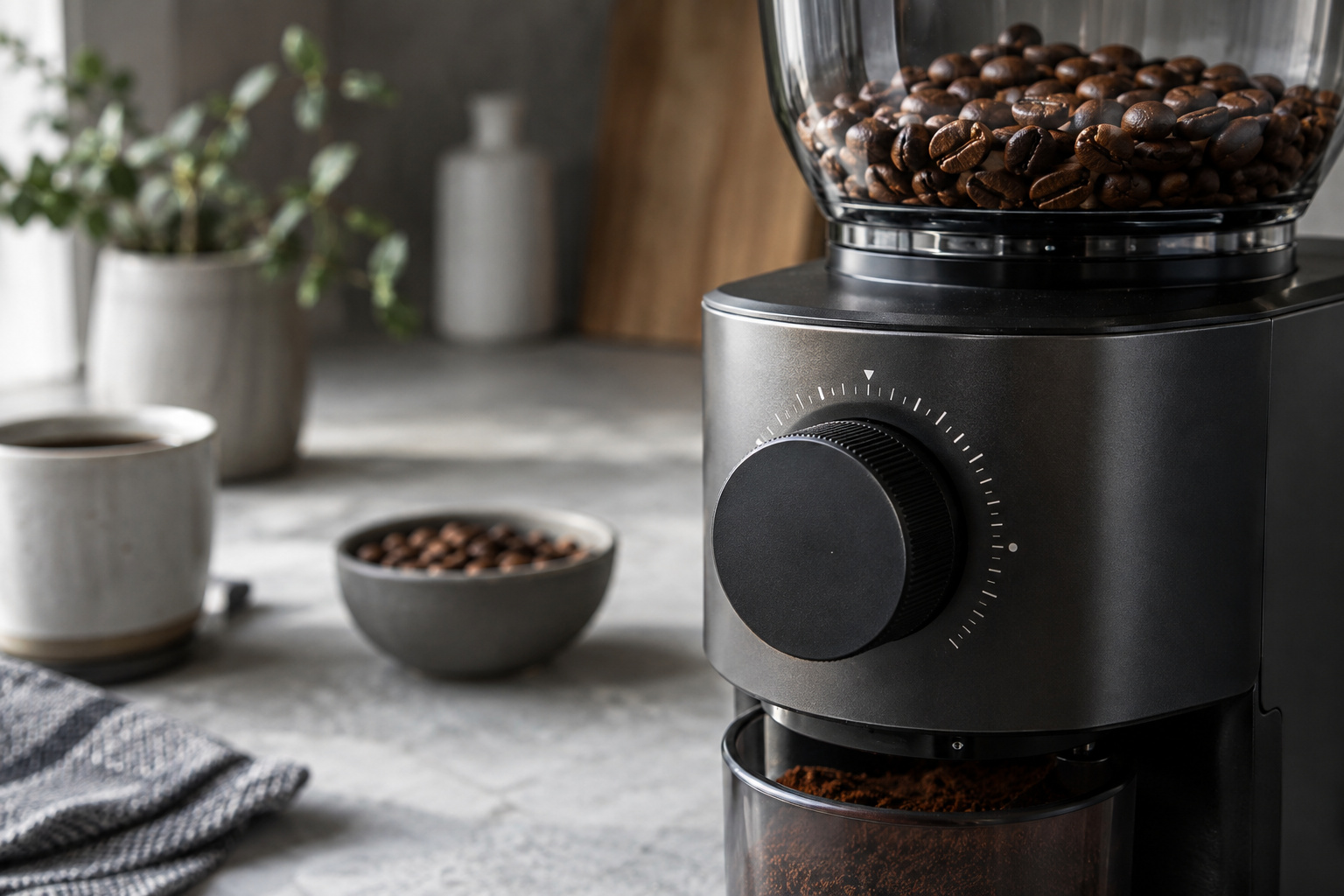
A stepped adjustment has defined positions; a stepless adjustment moves without those fixed stops. Baratza explains the distinction and describes model-specific variations in its adjustment guide. The practical consequence for shopping is that a count of settings alone is not a complete description. Ask how the adjustment works in the espresso range and how you return to a previous position.
Try to find a manual diagram or a clear manufacturer demonstration. Can you read the scale from where the grinder will stand? Can a second person record the position unambiguously? Does switching brew methods require a simple movement or a sequence you must learn? Avoid treating stepless as an automatic upgrade or stepped as proof of inadequate control. The useful comparison is between exact designs and your routine. If a seller cannot explain the controls beyond a marketing adjective, keep that uncertainty visible on the shortlist.
Map the path from beans to basket
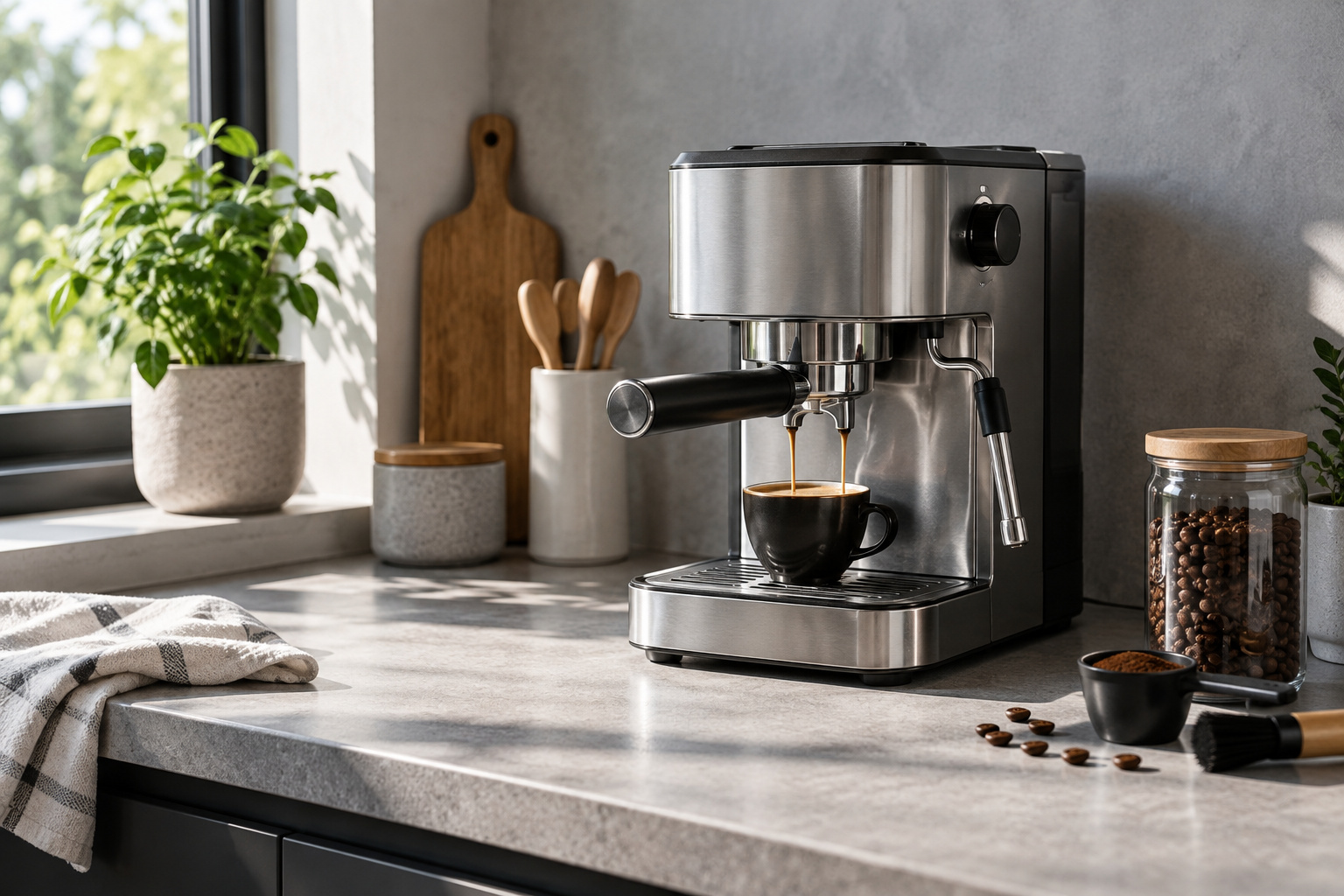
Imagine preparing one drink from beginning to end. Where do the beans go, where do the grounds land, and what do you carry to the espresso machine? Check whether the listing supplies a catch cup, holder or other relevant part. If it advertises direct dosing into a portafilter, verify the supported arrangement rather than assuming that every portafilter rests safely in the holder.
A scale can help you record what you used, but first check that it fits your preparation area and intended container. Do not infer dosing accuracy from a display photograph. Our dialing-in workflow explains why changing several inputs together makes learning harder. For the same reason, start with a straightforward transfer process that you can repeat. Decide where spilled grounds will be brushed away and where the container will sit when full. Small handling details can matter more in daily use than an accessory you only admire in the product photograph.
Budget for space and maintenance
Place the grinder on the paper plan for your counter. Include the height needed to reach the top, the room to remove its receiving container and a place for any removable pieces during cleaning. Compare the grinder and machine as one station; buying each because it looks compact separately does not guarantee that both fit comfortably together. Use the station layout guide to check the whole sequence.
Find the manufacturer's maintenance instructions before purchase. Ask which parts the owner is expected to remove, what cleaning tools are allowed and how reassembly is checked. Do not assume a grinder can be washed because its hopper can be detached. Keep maintenance procedures tied to the exact model. Replacement burrs or other parts should also be verified through the manufacturer, including the correct version. A repairable design is only useful to your household if the required parts, instructions and service channel can actually be identified.
Separate published facts from buying confidence
Create a short comparison sheet with columns for documented adjustment, receiving container, footprint, cleaning procedure and unresolved fit questions. Record the source next to each fact. Keep quoted model names exact because closely named versions may differ. Leave unsupported noise, retention and particle consistency claims out of the sheet unless you have suitable measurements and understand how they were obtained.
The current grinder cards below are research leads, not laboratory winners.
- Their ratings reflect documented listing data; this site has not measured their brewing performance.
- Review the exact listing and manufacturer documentation, then assess whether the operating sequence fits the routine you described.
- Do not buy a different machine solely to accommodate an accessory you have not verified.
- A sensible first grinder is one whose adjustment and maintenance process you understand, whose fit questions are resolved and whose purchase leaves room for the rest of your coffee setup.
- Keep your initial settings as a starting record, not a promise that the same number will work for every coffee.
| Section | Key point |
|---|---|
| Start with the basket and coffee you intend to use | Read the instructions supplied with that exact combination. |
| Understand the adjustment system | Can a second person record the position unambiguously? |
| Map the path from beans to basket | Imagine preparing one drink from beginning to end. |
| Budget for space and maintenance | Find the manufacturer's maintenance instructions before purchase. |
| Separate published facts from buying confidence | Record the source next to each fact. |