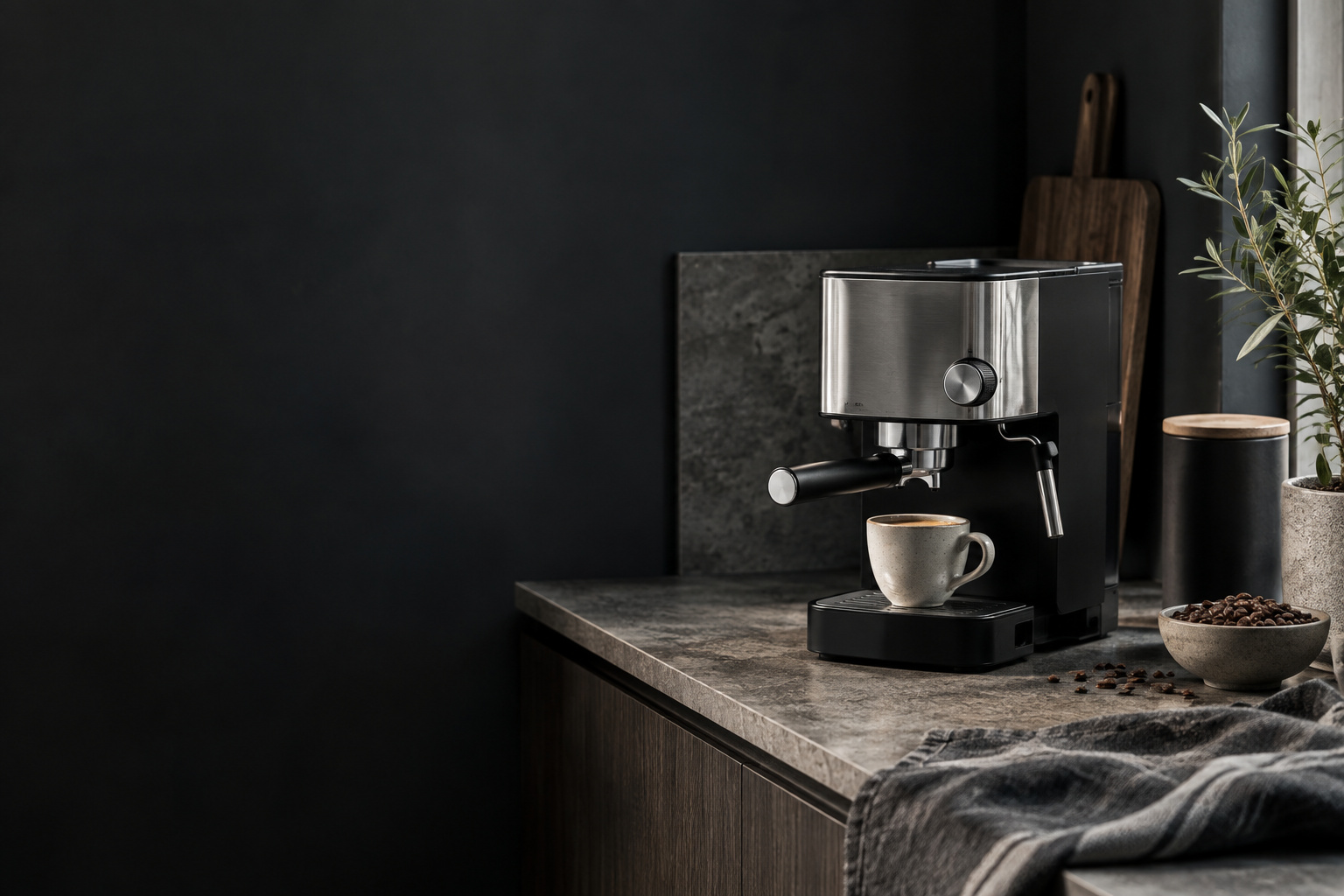
A compact machine is easier to maintain when each cleaning task has a name, a place and an instruction. Treat routine wiping, removable-part care, coffee-residue cleaning and descaling as separate jobs. The exact manual and product label control the procedure; this guide helps you organize the work rather than replace them.
Make an equipment-specific cleaning map
Write the machine model at the top of a page, then list the removable parts and maintenance operations actually described in its manual. Add the steam system if you use milk. Next to each task, note the approved product or tool, the relevant manual section and the condition that tells you when to do it. Leave a blank where the instructions do not answer a question and resolve that blank through support.
This prevents a common shopping mistake: treating all coffee equipment cleaners as interchangeable. Urnex's FAQ describes different cleaning purposes and product limitations. Use that information to understand categories, then confirm the exact appliance permission. Our water and scale guide explains why descaling belongs in its own part of the plan. Do not borrow a commercial machine's backflushing routine simply because its portafilter looks familiar. A process must be explicitly appropriate for the model in front of you.
Prepare a safe place before removing parts
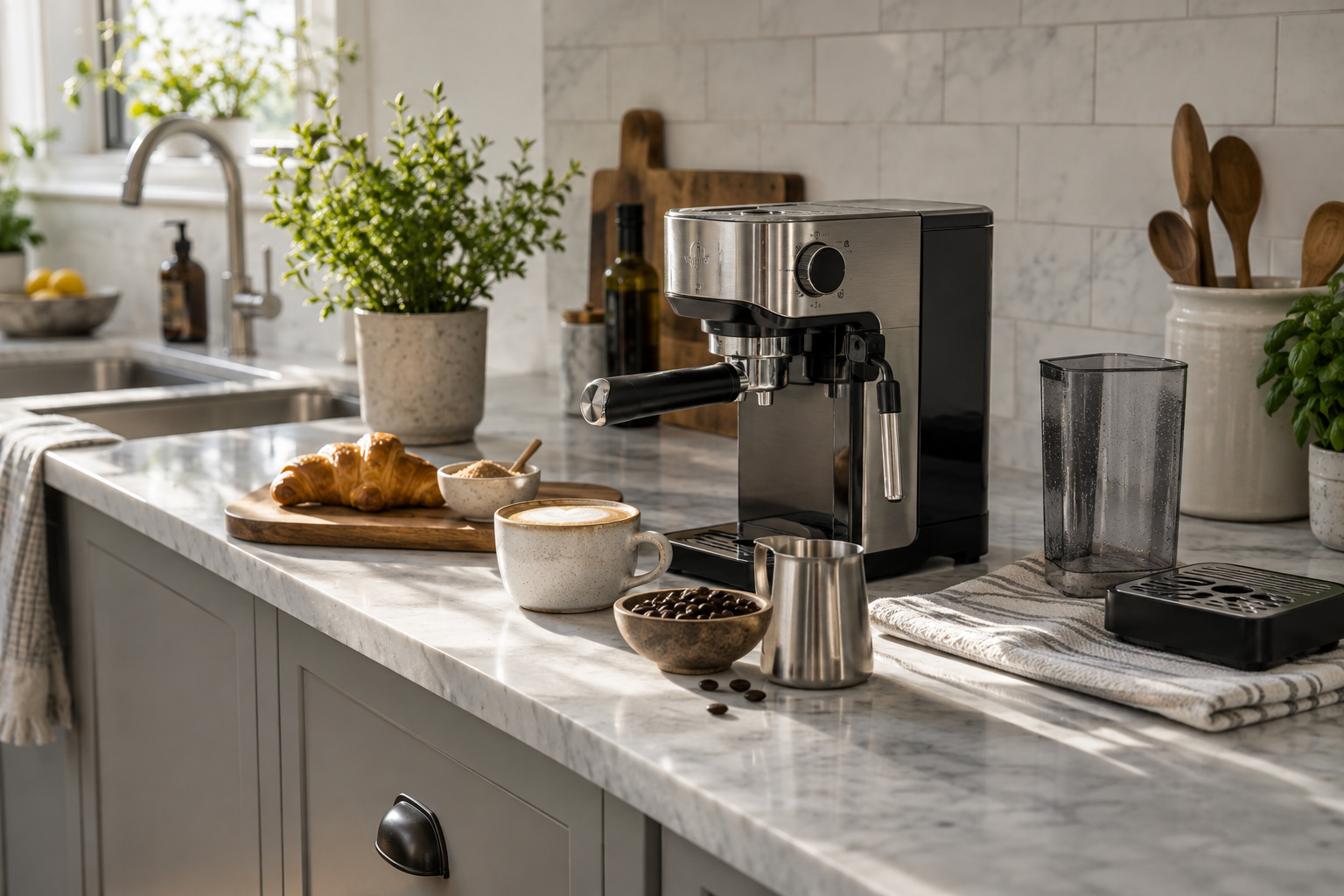
Finish normal operation and follow the shutdown and cooling instructions before routine handling. Keep a stable surface ready for removed pieces so they are not balanced on a sink edge. Separate tools used around coffee from household cleaning items whose residues or purpose are unclear. Put the instructions where you can read them without reaching across the appliance.
The Bambino manual warns against immersing the appliance and directs users to unplug and allow cooling before cleaning. Those are model-sourced safety points, not permission to improvise the rest of its cleaning process. Powered maintenance cycles require their own instructions and should not be confused with wiping an unplugged exterior. If a part resists removal, stop and check the diagram instead of applying extra force. Photographing the arrangement before disassembly can help with an owner-removable part, but do not open panels that the manual reserves for service.
Give every supply a specific job
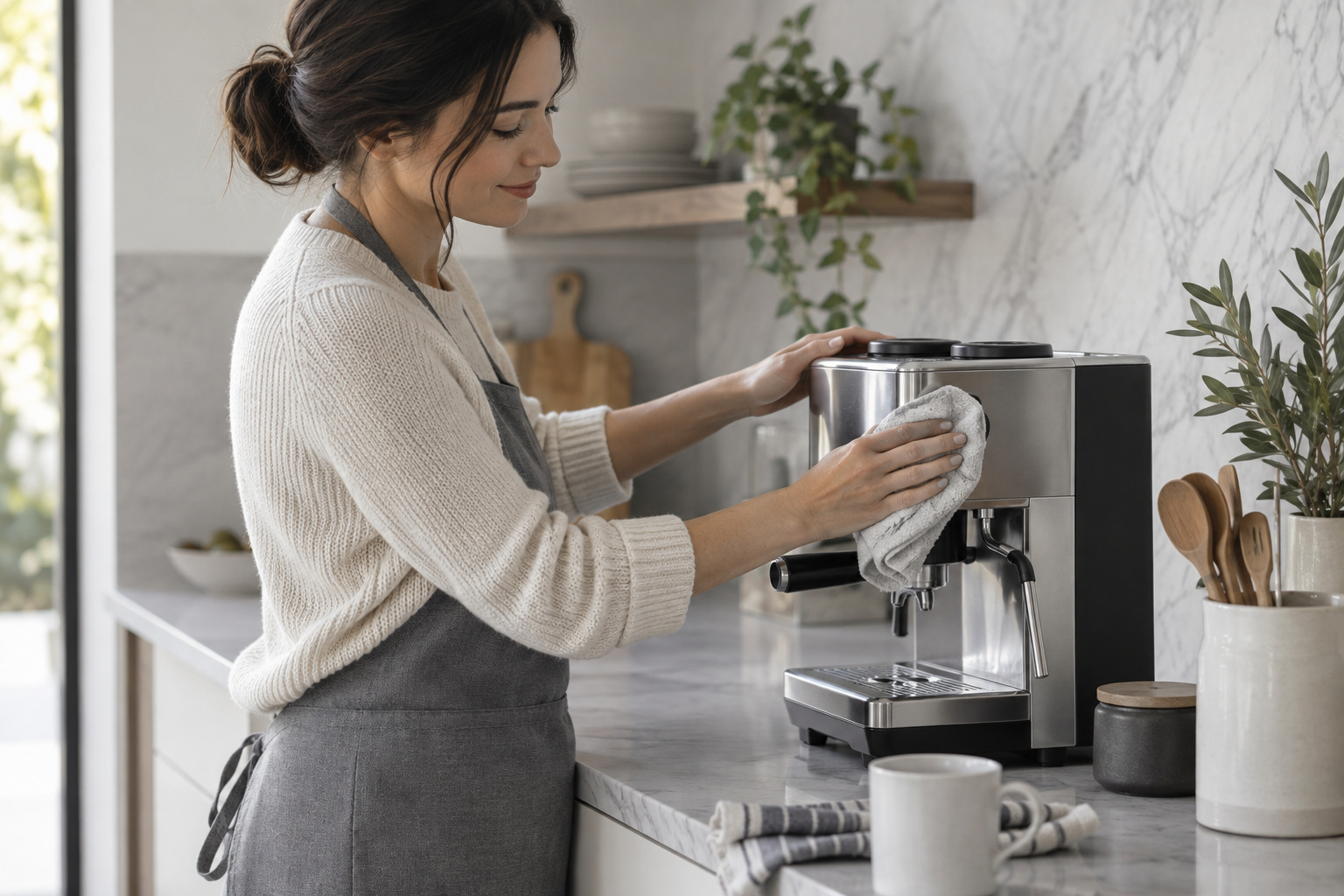
Check what a bottle or tablet is intended to clean. Read the full label rather than relying on a broad phrase such as espresso cleaner in the listing. Confirm whether the product belongs in a permitted soaking procedure, a designated machine cycle or another application. Do not put a cleaner into the water tank merely because the tank is the easiest opening to reach.
Follow the stated amount and rinsing instructions exactly when the machine and cleaner instructions agree. If they appear to conflict, ask the manufacturer rather than choosing the stronger option. Never combine cleaning products or substitute a household chemical based on an online shortcut. Keep the original packaging so the product identity and directions remain available. A maintenance kit is useful when it simplifies a documented routine; it is not useful if it leaves you guessing which component goes where. Store everything away from ingredients and drinking vessels after the task is complete.
Make the milk routine easy to repeat
If you prepare milk drinks, plan the cleanup before you start steaming. Know where the dedicated cloth, pitcher and permitted cleaning tools will go. Follow the exact wand instructions, including any purge behavior and precautions around hot steam. An automatic function on one model does not establish what another model does after the user presses a button.
Our small-machine milk guide treats cleanup as part of the drink-making sequence. Use the same idea in your layout: avoid a routine that requires you to carry a hot pitcher across the room to find a cloth. Once the equipment is in the state specified for cleaning, inspect it as the manual directs. Do not use an unapproved pin or force a blocked opening. If the supplied tool or process does not resolve the problem, report the symptom to support instead of escalating to improvised disassembly.
Verify the result and record the task
Check that owner-removable parts are reassembled as instructed and that the required rinse or completion steps are finished. A maintenance note should say what you did, not simply that the machine was cleaned. Record the product used and any warning that remained. This is especially useful in a shared kitchen where another person may otherwise repeat the same chemical cycle.
If operation is still abnormal, use the observation-based troubleshooting checklist and stop where the manual tells you to seek service.
- A persistent symptom is not evidence that a more concentrated cleaner is needed.
- The product cards here are possible maintenance supplies selected by category, rated from listing documentation only.
- Verify their exact purpose and compatibility before buying.
- Keep your routine small enough to complete reliably: accessible instructions, identifiable supplies, correct handling and a clear completion check.
- That is a more useful ownership habit than an elaborate kit purchased without knowing whether its contents belong in your machine.
| Section | Key point |
|---|---|
| Make an equipment-specific cleaning map | Add the steam system if you use milk. |
| Prepare a safe place before removing parts | Finish normal operation and follow the shutdown and cooling instructions before routine handling. |
| Give every supply a specific job | Check what a bottle or tablet is intended to clean. |
| Make the milk routine easy to repeat | Do not use an unapproved pin or force a blocked opening. |
| Verify the result and record the task | Verify their exact purpose and compatibility before buying. |